


Basic Dyes
What is Basic Dyes
Basic dyes are water-soluble cationic dyes that are mainly applied to acrylic fibers, but find some use for wool and silk. Usually acetic acid is added to the dye bath to help the uptake of the dye onto the fiber. Basic dyes are also used in the coloration of paper.Basic dyes are called so since they are salts of organic bases. They are also known as cationic dyes because of the presence of positive charge in the dye molecules under dyeing conditions. During dye application, the negatively charged acrylic fiber attracts the positively charged dye cations for ionic bonding. Due to high attraction between the oppositely charged fiber and dye molecules, there is risk of unlevel dyeing because of high rate of dyeing. This risk may be reduced by careful control of dyeing temperature and used of suitable retarding agents.
company advantage
Commitment to Quality
Quality is the cornerstone of our business. We adhere to rigorous quality control standards throughout our manufacturing processes, from sourcing raw materials to delivering finished products.
Comprehensive Experimental Equipment
High-quality equipment to make sure our quality is stable and consistent, from raw materials to semi-manufactured and finished cargo.
Innovation and Research
Understanding that every client is unique, we take a personalized approach to cater to individual requirements.
Global Expertise
While rooted in China, our global outlook enables us to serve clients worldwide. With a robust distribution network and efficient logistics, we ensure timely deliveries and seamless transactions across borders.


Benefits of Basic Dyes
Color Diversity
Basic dyes offer a wide spectrum of colors, allowing for a diverse range of applications in various industries. This diversity is crucial for meeting consumer preferences and industry demands.
01
Cost-Effective
Basic dyes are often more cost-effective than some other types of dyes, making them a preferred choice for industries that require large-scale coloration.
02
Long-Lasting Colors
Basic dyes are known for their excellent colorfastness, ensuring that the colors remain vibrant and stable over time. This is particularly important in textiles and cosmetics, where color durability is a key factor.
03
Compatibility with Natural Fibers
Basic dyes have a natural affinity for cellulosic fibers like cotton, making them ideal for coloring fabrics made from these materials.
04
Biological Research
In the field of biology, basic dyes play a crucial role in staining tissues and cells, aiding researchers in visualizing and studying biological specimens.
05
Textile Industry
One of the primary applications of basic dyes is in the textile industry. They are used to color natural fibers like cotton, wool, and silk, producing a wide range of colors. The vibrant and long-lasting hues achieved with basic dyes make them indispensable in the fashion and apparel sectors.
Paper and Printing
Basic dyes are used in the paper industry to color paper and cardboard products. They are also employed in the printing industry for producing vivid and sharp images in newspapers, magazines, and packaging materials.
Leather Coloring
Basic dyes find application in the leather industry to color leather products such as shoes, bags, and upholstery.
Cosmetics
Basic dyes are used in cosmetics, especially in the production of lipsticks, nail polishes, and hair dyes. Their ability to produce intense colors makes them popular choices for enhancing personal beauty products.
Biological Staining
In biology and microscopy, basic dyes are employed for staining tissues and cells. Examples include hematoxylin and eosin, which are used to stain various cellular components for microscopic examination.
Types of Basic Dyes
Auramine O
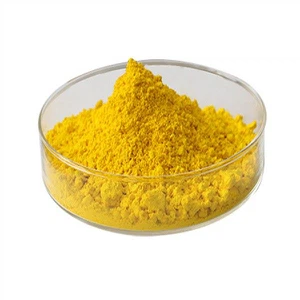
The most important basic yellow is auramine O, which is highly regarded for the exceptionally pure hues it creates. It's manufactured by heating 4,4'– dimethylaminodiphenylmethane, sulphur, ammonium chloride, and sodium chloride (as diluents) to 175°C in the presence of gaseous ammonia. The resulting Auramine base is transformed into Auramine O, which is its hydrochloride.
Malachite Green
Malachite Green is made by combining two dimethylaniline molecules with one benzaldehyde molecule. The dye salt with acid is then made by oxidizing the leuco base with oxidizing agents with high electrochemical potential, such as lead dioxide.
Methylene Blue
Methylene Blue is made by oxidising a mixture of dimethylaniline and-amino-dimethyl aniline (in equal amounts) and sodium thiosulphate in the presence of zinc chloride with sodium dichromate and hydrochloric acid (to get the final dye as zinc chloride double salt).
New Magenta
1 kg anhydro formaldehyde, 5 kg toluidine hydrochloride and 1 kg o-toluidine are heated in an enameled vessel for 2–3 hours at 170°C with 1.2 kg o-nitrotoluene and 100 grams iron fillings. By distilling with steam, the unreacted o-toluidine and o-nitrotoluene are removed, the residue is filtered hot, and the New Fuchsin is salted out.
Principle Characteristics of Basic Dyes Are Described Below
Ionic nature - The ionic nature of these dyes is cationic.
Shade range - These dyes exhibit an unlimited shade range with high tinctorial strength, brightness and many colors are having fluorescent properties.
Solubility - The solubility of these dyes is very good in water, in the presence of glacial acetic acid.
Leveling properties - These dyes have a very high strike rate, therefore leveling is poor.
Exhaustion - Cationic dyes exhaust at a variable rates, K values are used to define the exhaustion characteristics of the cationic dyes. K=1 means the fastest exhaustion, while K=5 means the slowest exhaustion. So while making the combination shades the dyes of similar K values must be used.
Affinity - These dyes shows a very affinity towards wool, silk and cationic dye able acrylic, but have no affinity towards cellulosics. To dye cellulosics with basic dyes the material must be treated with suitable mordanting agents.
The Following are The Main Properties of Basic Dyes


Ionic character
Basic dyes are cationic soluble salts of coloured bases with an ionic character. The dyestuff is the basic or positive radical in basic dyes, which are salts, mainly chlorides.
Reactivity
On the basic side of the isoelectric points, the basic dyes react. These are used on anionic substrates to create electrostatic attraction.
Cationic dyes
Because the chromophore in basic dye molecules has a positive charge, they are referred to as cationic dyes.
Shade range
These dyes have an infinite shade range, strong tinctorial strength, brightness, and fluorescent qualities in many colours.
Solubility
Many basic colours are only sparsely soluble in water, but readily soluble in alcohol or methylated spirits. The addition of glacial acetic acid aids in the rapid dissolution of the basic dye in water.
Leveling properties
Because these colours have a high striking rate, they have poor levelling properties.
Exhaustion
Cationic dyes have a varied rate of exhaustion; K values are used to determine the cationic dyes' exhaustion characteristics. The fastest exhaustion is K=1, while the slowest exhaustion is K=5. As a result, dyes with identical K values must be used to create the combination hues.
Affinity
These dyes have a strong affinity for wool, silk, and cationic dye-able acrylic, but no affinity for cellulosic. To use basic colours on cellulosic, the material must be clean.
Application on Cotton Fabric
Basic colours are not employed on cotton because the structures are not planar or large enough to provide appropriate adhesive properties or affinity. However, after treating cotton or other textiles dyed with direct colours, basic dyestuffs are utilised. The direct dyestuff works as a mordant in this case.
Fastness Characteristics
Wet fastness is good, while lightfastness is poor to moderate. Back tanning can also improve the wet fastness of basic colours on protein fibres. This is done after the coloured material has been treated with tannic acid to generate an insoluble compound, which reduces the potential to migrate.
How to Choose Basic Dyes
Consider the Material
Different basic dyes are designed to work with specific materials, such as paper, textiles, or plastics. Make sure you choose a basic dye that is compatible with the material you are working with.
01
Color Properties
Basic dyes are available in a wide range of colors, and some dyes may be more suitable for certain applications than others. Consider the color properties of the dye, including its hue, saturation, and lightfastness, when choosing a dye for your project.
02
Concentration
Basic dyes are typically sold in concentrated forms, which can be diluted to achieve the desired color strength. Consider the concentration of the dye you are using and make sure you dilute it properly to achieve the desired color.
03
Application Method
Different basic dyes may be more suitable for certain application methods, such as dyeing, printing, or painting. Make sure you choose a dye that is appropriate for the specific application method you plan to use.
04
Environmental Impact
Some basic dyes may have negative environmental impacts, such as toxicity or pollution. Consider the environmental impact of the dye you are using and choose a product that is safe and eco-friendly.
05
How The Basic Dyes Work
Basic dyes are able to bond with paper fibers due to their positive charge. Paper fibers are negatively charged, which means that they are attracted to positively charged molecules such as basic dyes.
When basic dyes are added to water, they dissolve and become positively charged cations. These cations are attracted to the negatively charged surfaces of the paper fibers, causing the dyes to bond with the fibers. The strength of the bond between the basic dye and the paper fibers depends on the properties of the dye and the fibers.
Once the basic dye has bonded with the paper fibers, it becomes embedded within the fiber matrix. This means that the color is more resistant to fading or running than it would be if the dye was simply coating the surface of the paper.
What is the Difference Between Acidic Dyes and Basic Dyes?

Chemical properties
Acid dyes usually contain acidic groups (such as sulfonic acid groups or carboxylic acid groups) and are anionic dyes that dye in acidic media; basic dyes contain amino groups and are cationic dyes that dye in alkaline media. 1245678
Application scope
Acid dyes are mainly used for dyeing wool, silk and nylon, as well as leather, paper, ink, etc.; basic dyes are mainly used for dyeing cell walls, cell nuclei and certain special organelles, such as mucus, collagen, actin, etc., and are also used Used in the coloring of stationery and paper and the production of lakes.

Dyeing effect
Dyeing fixatives need to be added when dyeing with acid dyes, which have bright colors and complete chromatograms, but poor light fastness; basic dyes have bright colors and strong fluorescence, but relatively weak tinting power, fast dyeing speeds, and no need for dyeing fixatives, but they are easy to use. fade.
Environmental Impact
Acid dyes are dyed in an acidic environment, and acidic wastewater will be discharged during the dyeing process, which has certain pollution to the environment; basic dyes are dyed in an alkaline environment, and the wastewater generated during the dyeing process is cleaner and has less impact on the environment.
Things to Note About Basic Dyes
When using alkaline dyes, you need to pay attention to safety issues. You must abide by the storage and use methods of chemical reagents, and use safe reagents as much as possible.
During the dyeing process, the dyeing conditions need to be strictly controlled to avoid deviations that may affect the dyeing effect.
After dyeing is completed, sufficient cleaning and drying operations are required to ensure the stability and gloss of the dyeing.
Our Factory
Hangzhou Reward Technology Co.,Ltd
Established in 2014, Hangzhou Reward has emerged as a leading player in the chemical industry, specializing in the production and distribution of a wide range of high-quality products. With a firm commitment to innovation, quality, and customer satisfaction, we have solidified our position as a prominent supplier in China's chemical market.


Our Certificate


fAQ
Q: Why basic dyes are so called?
Q: What is basic vs acid dye?
Q: What are basic or cationic dyes?
Q: How do basic dyes work?
Q: What is the most commonly used basic dye?
Q: Why are basic dyes better than acidic dyes?
Q: Are clothing dyes acidic or basic?
Q: Is methylene blue a basic dye?
Q: What are the three basic dyes?
Q: What do basic dyes stain?
Q: Why flamming used basic dye?
Q: Is hematoxylin a basic dye?
Q: Is eosin a basic dye?
Q: What are the two main types of dyes?
Q: Can you use basic dye to stain most bacteria?
Q: Are basic dyes attracted to bacteria?
Q: Is basic dye soluble in water?
Q: Why do bacterial cells absorb the basic dyes?
Q: Why would basic dyes be more effective under alkaline conditions?
Q: Why do you use acid dye?
We're professional basic dyes manufacturers and suppliers in China, specialized in providing high quality face masks. We warmly welcome you to wholesale bulk cheap basic dyes for sale here from our factory. For price consultation, contact us.