


Vat Dyes
What is Vat Dyes
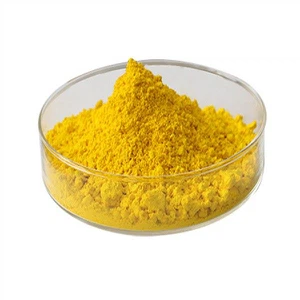
Vat dyes are an older category of dyes that are also called vat dyes because they are used in vats. Vat dyes themselves are insoluble in water and need to be reduced and dissolved with a reducing agent before dyeing. They are divided into three categories according to their chemical structures: indigo and thioindigo, anthraquinones, and anthrones. Vat dyes have bright colors, safe chromatography, washability, and lightfastness. They are important dyes for cotton and other cellulose fibers.
company advantage
Commitment to Quality
Quality is the cornerstone of our business. We adhere to rigorous quality control standards throughout our manufacturing processes, from sourcing raw materials to delivering finished products.
Comprehensive Experimental Equipment
High-quality equipment to make sure our quality is stable and consistent, from raw materials to semi-manufactured and finished cargo.
Innovation and Research
Understanding that every client is unique, we take a personalized approach to cater to individual requirements.
Global Expertise
While rooted in China, our global outlook enables us to serve clients worldwide. With a robust distribution network and efficient logistics, we ensure timely deliveries and seamless transactions across borders.


Benefits of Vat Dyes
The color of vat dyes is mostly intermediate colors
Its most important feature is the majority of intermediate colors. These intermediate colors are basically a single component with good dyeing reproducibility, especially the green, olive, flesh, brown and gray series.
Excellent light fastness and various compound fastness based on light fastness
At present, the requirements for various composite fastnesses based on light fastness, such as sweat-light fastness, sweat-light-washing fastness, sweat-light-rubbing fastness, etc., on cotton fabrics, especially light colors Compared with other types of cotton dyes, vat dyes have special properties in this respect.
Excellent chlorine resistance and wet fastness
Compared with reactive dyes, vat dyes have excellent chlorine fastness; in addition, vat dyes have excellent washing fastness, etc.
Excellent stability to the finishing processing of printed and dyed fabrics
Vat dyes have little competition for general resin finishing. In recent years, functional processing that changes the physical properties of fibers has been developed. Vat dyes have good stability, and vat dyes are more stable than reactive dyes. Variability over time.
Suitable for one-bath dyeing of blended fabrics
Vat dyes have the characteristics of homochromatic dyeing. It is suitable for one-bath continuous dyeing, printing and dip dyeing of these blended fabrics, and has excellent various fastnesses and special properties such as infrared resistance.
Excellent reduction resistance
This characteristic of vat dyes can be used to produce high-grade textiles for reactive dyes and vat dyes for anti-pull printing, groundless dyeing of polyester/cotton knitted fabrics (with liquid flow dyeing machine), and the first dyeing process of polyester/cotton blended fabrics ( Cheese dyeing) and high fastness printing and dyeing of polyester/cotton blended fabrics (using URS method), etc.
What are the Applications of Vat Dyes
Shanghai Jwell machinery Workshop co-operation projects

Dye
Vat dye-dyed cotton fabrics mainly use the dip-dying process, and cheese dyeing machines or beam dyeing machines can be used depending on the processing volume. In recent years, in order to adapt to the high quality of cotton knitted fabrics, liquid flow dyeing machines are also used. In addition, garment dyeing will increase in response to the requirements of small batches and rapid processing.

Continuous dyeing
The vat dye suspension pad steaming process is used for continuous dyeing, which is suitable for large-volume fabric processing such as work clothes, coats and bedding; while jig dyeing is suitable for small batches; it is especially suitable for wide-width fabrics and can be used for thick fabrics such as tents. efficiency.

Printing
The most common method of vat dye printing is one-phase printing using potassium carbonate and anti-migration agent. A high-end printed textile that is very popular in Europe, the United States and Japan is printed cotton fabric that is ground-dyed with reactive dyes and discharge-dyed with vat dyes. in addition. The UPS method used for mass processing uses two-phase printing, which is most suitable for direct printing of outer covers, sleeves, etc.
Types of Vat Dyes
Anthraquinone vat dyes are the most important class of vat dyes. All vat dyes synthesized from anthraquinone or its derivatives and dyes with a quinone structure can fall into this category. It has the characteristics of excellent fastness, bright color, complete chromatogram, and high affinity of dye leuco acid sodium salt to fibers. However, some light-colored varieties have a brittle effect on cotton fibers. Most of the leuco acid sodium salts of this type of dye are darker in color than the unreduced ones, and only a few are similar in color to the unreduced ones. This is because the conjugated system increases after being reduced to leuco acid sodium salts. .
Indigo-type vat dyes not only refer to indigo and its derivatives, but also include thioindigo and its derivatives and various symmetric or asymmetric vat dyes with mixed structures of indigo and thioindigo. The most significant difference between indigo vat dyes and anthraquinones is that no matter what their original color is, the reduced leuco acid sodium salt is colorless or only contains a very light yellow or apricot color. The leuco body sodium salt of the dye has a low affinity for fibers, so it is not easy to dye deep and dense colors; if the dyed fabric is treated at high temperatures, sublimation will occur.
This series of dyes is very similar to anthraquinones regardless of their structure or dyeing properties. However, anthrathrone itself cannot be used as a dye because its leuco acid sodium salt has very low directivity to cellulose fibers and must be halogenated to become some orange or red vat dyes.
Vat dyes have excellent dye fastness, but are complicated to use, and highly alkaline dyeing baths are difficult to apply to protein fibers such as wool and silk. In the 1920s, the dry leuco salt of indigo was used in tertiary amine compounds to produce water-soluble sulfate esters using chlorosulfonic acid or sulfur trioxide. This sulfate is water-soluble and direct to fibers; after dyeing, it undergoes hydrolysis and oxidation in a sulfuric acid solution such as sodium nitrite and returns to indigo.
Do You Know These Advantages of Vat Dye?

Most of vat dyes are middle colors
Vat dyes has a full range of characteristics from yellow to black and bright to general colors.The most important feature of which is the majority of intermediate colors, which are essentially single components, advanced reproducibility, especially green, Olive green, flesh, brown and gray series.For example, green reactive dyes are generally made of yellow and turquoise colors. Dyeing control is extremely important for combining different performance of reactive dyes.

Having excellent light fastness and various fastness to light fastness
At present Various fastness to light fastness on cotton fabric, Such asPerspiration - fastness to sunlight, perspiration - daylight - washing fastness, perspiration - daylight - rubbing fastness, etc. Compared with other types of cotton dyes, vat dyes have special properties Therefore, it is very suitable for dyeing and printing to work clothes, summer clothes, sportswear, coats, curtains, furniture cover.

It has excellent chlorine resistance and wet fastness.
To compared with vat dyes and reactive dyes, the former one has better chlorine resistance, no matter the fastness of chlorine water(20ppm) or chlorine(500ppm).In addition, Vat dyes have excellent washing fastness etc, so vat dyes are applicable for the occasions with high requirements of chlorine disinfection and washing resistance, for example, printing and dyeing for fabrics, bedding, covers, bed sheets, clothing, etc. in hotels and hospitals. Especially for the product of the requirements of washing treatment which needs to be washed for many times, the advantage of using vat dyes is more obvious. In addition, vat dyes are also applicable for dyeing and printing of textiles requiring the highest wet fastness.

The excellent stability of post processing on printing and dyeing fabric
Besides, vat dye has a very good stability developed in recent years during the improvements of the functional changes in the fiber of the functional processing, such as shape memory processing, morphological stability processing, deodorant processing, antibacterial processing, etc.
Steps In Working With Vat Dyes
Aqueous dispersion
The insoluble vat dyes, in this stage dispersed in water.
Vatting
Vatting in which the insoluble commercial dye is reduced and solidities (vatted) by using Sodium hydrosulphite (hydrose) and Sodium hydroxide (NaOH). Sodium hydrosulphite work as a reducing agent. Again salt formation by neutralising their hydroxide to give a water soluble product. Sodium hydroxide is used as a solubilising agent.
Dye absorption
Dyeing, in which the soluble sodium salt of the leuco vat dye is absorbed by the textile material from an alkaline reducing medium in the presence of either a retarding agent or an exhausting agent depending on the rate of dyeing. In this stage, the textile material must be immersed in dye liquor to prevent oxidation of leuco compound.
Reoxidation of vat dye
Oxidation, in which the soluble form of the dye absorbed by the fiber, is reconverted into the original insoluble dye by atmospheric oxygen (Airing) or by the use of “chemical oxidation.” (i.e. involving the use of a chemical like sodium per borate or potassium dichromate or Hydrogen per oxide).
After treatment
During the previous stage some insoluble vat dye may be disposited on the surface of the textile material. Soaping-off, in which the dyed material is subjected to a treatment either boiling soap or other detergent solution in order to get the proper tone by way of aggregation of smaller dye particles into bigger ones and also to get the optimum fastness, especially rubbing fastness by removing the surface deposited dye particles.
Vat dye process types
Batch-wise exhaust dyeing process
Yarn in hank or package form, jigger dyeing, jet dyeing, soft flow dyeing machine are recommended for fabric dyeing.
Semi-continuous dyeing process
It is well known that the usual method of vat dyeing in jigger by exhaust process is not satisfactory for thick fabric and also due to the consumption of higher amount of chemicals.
Continuous dyeing process
Various other suggestions for the continuous dyeing of cellulosic fabrics with vat dyes have been used. Continuous dyeing is economical particularly where long yardages have to be dyed in the same color.
Properties of Vat Dye
Vat dyes have lots of properties that are required to remember before and during the dyeing process. The following are the main properties of vat dyes.
1.Vat dyes are natural coloring dyes.
2.Vat dyes are insoluble in water.
3.Vatting process is needed for making the insoluble vat dyes into soluble form.
4.Final color is developed by the oxidation process.
5.Vatting is done in alkaline condition.
6.Fastness properties of the dyes are excellent but its rubbing properties are not so good.
7.Sometimes, it causes different types of skin disease.
8.Vat dyes are mainly used for coloring cellulosic fibers.
9.Stability of the color in the fiber is excellent.
10.Wide range of color can be achieved by these dyes.
11.Application of vat dyes is limited in practical life.
12.Vat dyes are expensive in price.
Characteristics of vat dyes
Impeccable Fastness
Vat dyes are well known for their excellent fastness, which is superior to that of many other dyes. This means that textiles dyed with vat dyes are known to last significantly longer than those dyed with other methods.
Unending brightness
Vat dyes are favoured since the colour that is applied initially lasts and keeps the clothes appearing fresh and brilliant for a long time. This contributes to the increased operational value of the goods on which the dyes are applied.
Versatility
While vat dye producers offer dyes that are insoluble in water, these dyes can be made water-soluble by combining them with chemicals. This implies that using the dyes is classic and convenient, which explains why it is so popular.
Our Factory
Hangzhou Reward Technology Co.,Ltd
Established in 2014, Hangzhou Reward has emerged as a leading player in the chemical industry, specializing in the production and distribution of a wide range of high-quality products. With a firm commitment to innovation, quality, and customer satisfaction, we have solidified our position as a prominent supplier in China's chemical market.


Our Certificate


FAQ
Q: What are the advantages of vat dyes?
Q: What is mordant and vat dyes?
Q: Are vat dyes eco friendly?
Q: Why is it called vat dye?
Q: What are the disadvantages of vat dye?
Q: Is Alizarin a vat dye?
Q: Why vat dyes are better than Sulphur dyes?
Q: What are the advantages of reactive dyes over vat dyes?
Q: Is vat dye soluble in water?
Q: What is an example of a vat dye?
Q: What is the other name of vat dye?
Q: Why caustic soda is used in vat dyeing?
Q: How do you identify vat dye?
Q: Is Sulphur dye vat dye?
Q: Which dye is mostly used in textile industry?
Q: What is the difference between reactive and vat?
Q: How fast are vat dyes to washing and light?
Q: What is stripping of vat dye?
Q: What are the problems with dyes?
Q: What is blue vat dye?
We're professional vat dyes manufacturers and suppliers in China, specialized in providing high quality face masks. We warmly welcome you to wholesale bulk cheap vat dyes for sale here from our factory. For price consultation, contact us.