

The CAS number 64 - 72 - 2 corresponds to Choline chloride, a water - soluble quaternary ammonium salt that plays a vital role in various biological and industrial applications. As a reliable supplier of Choline chloride, I am not only committed to providing high - quality products but also eager to share in - depth scientific knowledge about it, especially regarding its intermolecular forces.
1. Introduction to Choline Chloride
Choline chloride has the chemical formula ((CH_3)_3N^+CH_2CH_2OHCl^-). It is an essential nutrient for both humans and animals, involved in neurotransmitter synthesis, lipid metabolism, and cell membrane structure. Due to its broad range of applications in the feed, pharmaceutical, and food industries, understanding its physical and chemical properties, including intermolecular forces, is of great significance.
2. Types of Intermolecular Forces in Choline Chloride
2.1 Ion - Dipole Forces
Choline chloride is an ionic compound, dissociating into choline cations ([(CH_3)_3N^+CH_2CH_2OH]) and chloride anions ((Cl^-)) in solution. In the solid state or when in contact with polar solvents, ion - dipole forces come into play. Polar solvents, such as water, have a dipole moment. The positive end of the water dipole (hydrogen atoms) is attracted to the chloride anions, while the negative end (oxygen atom) is attracted to the positively charged choline cations.

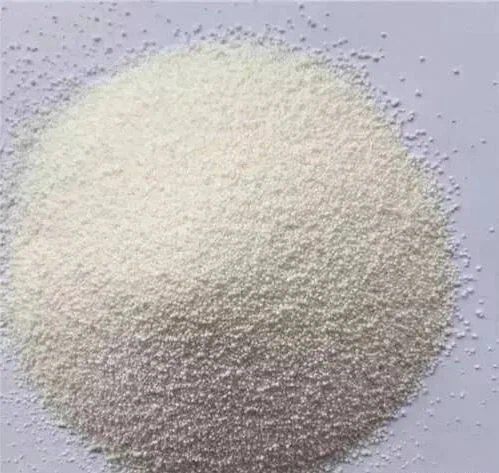
The strength of ion - dipole forces depends on the magnitude of the ion charge and the dipole moment of the solvent. For choline chloride in water, these forces are relatively strong because the ions are fully charged, and water has a significant dipole moment. This interaction is crucial for the solubility of choline chloride in water. When choline chloride is added to water, the ion - dipole forces overcome the ionic bonds in the solid, causing the compound to dissolve.
2.2 Hydrogen Bonding
The choline cation in choline chloride has a hydroxyl group ((-OH)). Hydrogen bonding can occur between the oxygen atom of the hydroxyl group and a hydrogen atom of a water molecule or another choline molecule. Hydrogen bonding is a special type of dipole - dipole interaction that is relatively strong.
The oxygen atom in the hydroxyl group is highly electronegative, causing the hydrogen atom to have a partial positive charge. This partial positive hydrogen can form a hydrogen bond with the lone pair of electrons on the oxygen atom of a water molecule or another choline molecule. Hydrogen bonding not only affects the solubility of choline chloride but also its melting and boiling points. Compounds with hydrogen bonding generally have higher melting and boiling points compared to those without, as more energy is required to break these strong intermolecular attractions.
2.3 Dipole - Dipole Forces
Even though choline chloride is an ionic compound, the choline cation has a permanent dipole moment due to the presence of the quaternary ammonium group and the hydroxyl group. The positive charge on the nitrogen atom and the polar nature of the hydroxyl group create a dipole. Dipole - dipole forces occur between the dipoles of adjacent choline cations.
These forces are weaker than ion - dipole forces and hydrogen bonding but still contribute to the overall intermolecular interactions in choline chloride. They influence the packing of choline cations in the solid state and can affect the physical properties such as density and crystal structure.
2.4 London Dispersion Forces
London dispersion forces are present in all molecules, including choline chloride. These forces arise from the temporary fluctuations of electron density within a molecule, creating temporary dipoles. In choline chloride, the non - polar parts of the choline cation, such as the methyl groups ((-CH_3)), experience London dispersion forces.
Although London dispersion forces are the weakest of the intermolecular forces, they can still have an impact, especially in non - polar or weakly polar environments. In the solid state of choline chloride, these forces contribute to the overall cohesive energy between molecules, helping to hold the crystal structure together.
3. Significance of Intermolecular Forces in Applications
3.1 Solubility
As mentioned earlier, the ion - dipole forces and hydrogen bonding are responsible for the high solubility of choline chloride in water. This solubility is crucial in the feed industry, where choline chloride is often added to animal feed in the form of a solution. It ensures that the nutrient can be easily absorbed by animals. In the pharmaceutical industry, the solubility in water also facilitates its use in various formulations.
3.2 Stability
The intermolecular forces in choline chloride contribute to its stability. The strong ion - dipole and hydrogen bonding interactions prevent the easy decomposition of the compound. This stability is important in long - term storage and transportation of choline chloride products.
3.3 Compatibility with Other Substances
Understanding the intermolecular forces helps in predicting the compatibility of choline chloride with other substances. For example, when formulating animal feed, it is necessary to ensure that choline chloride does not react or interact negatively with other feed additives. Knowledge of its intermolecular forces can guide the selection of compatible ingredients.
4. Comparison with Related Compounds
To better understand the intermolecular forces of choline chloride, it is useful to compare it with related compounds.
For example, Tilmicosin Phosphate CAS No.: 137330 - 13 - 3 is an antibiotic. Unlike choline chloride, it is a large organic molecule with more complex intermolecular forces. Tilmicosin phosphate has multiple functional groups, and its intermolecular forces may include hydrogen bonding, dipole - dipole forces, and London dispersion forces. However, the absence of ionic dissociation means that ion - dipole forces are not present in the same way as in choline chloride.
Norloxacin Base CAS No.: 70458 - 96 - 7 is another pharmaceutical compound. It also has a different set of intermolecular forces compared to choline chloride. Norfloxacin Base has aromatic rings and polar functional groups, resulting in a unique combination of dipole - dipole, hydrogen bonding, and London dispersion forces.
Nicotinamide Niacinamide CAS No.: 98 - 92 - 0 is a vitamin - related compound. It has hydrogen bonding and dipole - dipole forces due to its amide group. While it shares some similarities with choline chloride in terms of hydrogen bonding, the overall intermolecular force profile is different because of its different chemical structure.
5. Our Role as a Supplier
As a supplier of choline chloride, we understand the importance of these intermolecular forces in the quality and performance of our products. We ensure that our manufacturing process produces choline chloride with consistent intermolecular force characteristics, which guarantees its solubility, stability, and compatibility.
We conduct rigorous quality control tests to verify the physical and chemical properties of our choline chloride, which are directly related to its intermolecular forces. By maintaining high - quality standards, we can provide our customers with products that meet their specific requirements in different industries.
6. Conclusion
In conclusion, the intermolecular forces in choline chloride (CAS No. 64 - 72 - 2) are a complex combination of ion - dipole forces, hydrogen bonding, dipole - dipole forces, and London dispersion forces. These forces play a crucial role in its solubility, stability, and compatibility, which are essential for its applications in the feed, pharmaceutical, and food industries.
If you are interested in purchasing high - quality choline chloride or have any questions about its properties and applications, please feel free to contact us for further discussion and procurement negotiation. We are committed to providing you with the best products and services.
References
- Atkins, P. W., & de Paula, J. (2006). Physical Chemistry. Oxford University Press.
- Morrison, R. T., & Boyd, R. N. (1992). Organic Chemistry. Prentice Hall.
- Lehninger, A. L., Nelson, D. L., & Cox, M. M. (2000). Principles of Biochemistry. Worth Publishers.