

Hey there! I'm a supplier of the chemical 475 - 71 - 8, and today I wanna chat about the interactions between 475 - 71 - 8 and other chemicals.
First off, let's understand a bit about 475 - 71 - 8. It's a pretty interesting chemical with some unique properties. It's often used in a variety of industrial applications, like in the manufacturing of certain types of dyes and pigments.
Now, when it comes to its interactions with other chemicals, it can react in different ways depending on what it's mixed with. For instance, when 475 - 71 - 8 comes into contact with strong oxidizing agents, there can be a chemical reaction that releases energy. Oxidizing agents are substances that can accept electrons from other chemicals. When they react with 475 - 71 - 8, they can cause a change in the chemical structure of 475 - 71 - 8, which might lead to the formation of new compounds. This kind of reaction is important in many industrial processes, as it can be used to create new materials or to modify the properties of existing ones.
On the other hand, when 475 - 71 - 8 is mixed with reducing agents, which are substances that donate electrons, a different type of reaction can occur. Reducing agents can reduce the oxidation state of 475 - 71 - 8, again changing its chemical properties. This can be useful in processes where we need to change the color or solubility of the chemical.
Let's talk about some specific chemicals that 475 - 71 - 8 might interact with in the dye industry. One such chemical is Vat Orange 11CAS:2712 - 33 - 0. When 475 - 71 - 8 is combined with Vat Orange 11, they can form a complex mixture. This mixture can have different color properties compared to the individual chemicals. The interaction between them might involve the exchange of certain chemical groups, which can affect the overall color intensity and hue of the resulting dye.
Another important chemical in the dye industry is Vat Red 29 CAS: 6424 - 77 - 7. When 475 - 71 - 8 reacts with Vat Red 29, it can lead to the formation of a new dye compound. This new compound might have enhanced color fastness, which means it can retain its color better when exposed to light, water, or other environmental factors. The reaction between them could be a result of the compatibility of their molecular structures, allowing them to bond and form a more stable dye.

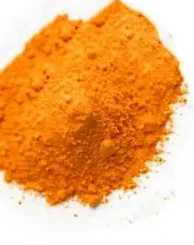
Vat Black 9 CAS NO. 1328 - 25 - 2 is also a chemical that can interact with 475 - 71 - 8. The combination of these two chemicals can produce a darker and more intense black color compared to using Vat Black 9 alone. The interaction might involve some kind of chemical bonding that changes the way light is absorbed and reflected by the resulting mixture, giving it a more vivid and deep black shade.
It's important to note that these interactions need to be carefully controlled. In industrial settings, the reaction conditions such as temperature, pressure, and the concentration of the chemicals are closely monitored. If the conditions are not right, the reaction might not occur as expected, or it could even lead to the formation of unwanted by - products.
For example, if the temperature is too high during the reaction between 475 - 71 - 8 and another chemical, it could cause the chemicals to decompose. Decomposition means that the chemicals break down into simpler substances, which can ruin the desired reaction and waste the materials. On the other hand, if the temperature is too low, the reaction might be too slow or might not occur at all.
The concentration of the chemicals also plays a crucial role. If there is too much of one chemical compared to the other, the reaction might not proceed in the way we want. For instance, if there is an excess of 475 - 71 - 8 in a reaction with Vat Orange 11, it might lead to an unbalanced mixture, and the resulting dye might not have the desired color or properties.
In addition to the chemical reactions, 475 - 71 - 8 can also have physical interactions with other chemicals. For example, it can dissolve in certain solvents. Solvents are substances that can dissolve other chemicals. When 475 - 71 - 8 is dissolved in a solvent, it can form a solution. The solubility of 475 - 71 - 8 in different solvents depends on the chemical nature of the solvent. Polar solvents, which have a separation of electric charge, might dissolve 475 - 71 - 8 better if 475 - 71 - 8 is also a polar chemical. Non - polar solvents, on the other hand, might not be able to dissolve it as well.
These physical interactions are also important in the dye industry. For example, when preparing a dye solution, we need to choose the right solvent to ensure that 475 - 71 - 8 and other dyes are well - dissolved. A well - dissolved dye solution can be more evenly applied to the fabric, resulting in a more uniform color.
So, as you can see, the interactions between 475 - 71 - 8 and other chemicals are quite complex and diverse. They can have a big impact on the properties and applications of the resulting products, especially in the dye industry.
If you're in the business of dyes or other industries that might use 475 - 71 - 8, I'd love to have a chat with you. Whether you're looking to learn more about its interactions or are interested in purchasing 475 - 71 - 8, don't hesitate to reach out. We can have a detailed discussion about your specific needs and how 475 - 71 - 8 can fit into your processes.
References
- General Chemistry textbooks on chemical reactions and interactions
- Industry reports on dye manufacturing and chemical usage