

In the realm of chemical compounds, the compound with the identification number 475 - 71 - 8 presents a fascinating subject of study. As a dedicated supplier of this compound, I've witnessed firsthand the diverse applications and the profound influence of its functional groups on its properties. In this blog, we'll delve into the effects of different functional groups on the properties of 475 - 71 - 8, exploring how these groups shape its behavior and utility across various industries.
Understanding 475 - 71 - 8 and Its Functional Groups
Before we dive into the effects of functional groups, it's essential to have a basic understanding of 475 - 71 - 8. This compound belongs to a class of chemicals that are widely used in the dye and pigment industries. Functional groups are specific groups of atoms within a molecule that are responsible for the characteristic chemical reactions of that molecule. They play a crucial role in determining the physical and chemical properties of the compound.
Solubility and Functional Groups
One of the most significant effects of functional groups on 475 - 71 - 8 is their impact on solubility. Polar functional groups, such as hydroxyl (-OH) and carboxyl (-COOH) groups, tend to increase the solubility of the compound in polar solvents like water. This is because these groups can form hydrogen bonds with water molecules, allowing the compound to dissolve more readily. On the other hand, non - polar functional groups, such as alkyl groups, decrease the solubility in polar solvents but increase the solubility in non - polar solvents like benzene or toluene.
For example, if 475 - 71 - 8 contains hydroxyl groups, it will have a better affinity for water - based solutions. This property is highly desirable in applications where the compound needs to be dispersed in an aqueous medium, such as in water - based dyes. In contrast, a compound with a high proportion of alkyl groups may be more suitable for use in oil - based paints and coatings, where solubility in non - polar solvents is required.
Reactivity and Functional Groups
Functional groups also significantly affect the reactivity of 475 - 71 - 8. Different functional groups have different levels of reactivity towards various reagents. For instance, carbonyl groups (C = O) are highly reactive and can undergo reactions such as nucleophilic addition reactions. If 475 - 71 - 8 contains carbonyl groups, it can be used in synthesis reactions to form new compounds.
Amino groups (-NH₂) are another example of reactive functional groups. They can react with acids to form salts or participate in condensation reactions to form amides. The presence of amino groups in 475 - 71 - 8 can open up a wide range of chemical reactions, making it a versatile building block in organic synthesis.
Color and Functional Groups
In the context of the dye industry, the color of 475 - 71 - 8 is closely related to its functional groups. Conjugated systems, which consist of alternating single and multiple bonds, are responsible for the absorption of light in the visible spectrum, giving the compound its color. Functional groups can affect the extent and nature of conjugation in the molecule.
For example, adding electron - donating functional groups, such as amino or hydroxyl groups, to the conjugated system can shift the absorption spectrum to longer wavelengths, resulting in a change in color. This principle is widely used in the design of dyes. If you're interested in other dyes, you can check out Vat Blue 5508CAS:2475 - 31 - 2, Vat Green 1 CAS:128 - 58 - 5, and Vat Red 31 CAS: 12227 - 47 - 3.
Stability and Functional Groups
The stability of 475 - 71 - 8 is also influenced by its functional groups. Some functional groups are more prone to oxidation or hydrolysis than others. For example, aldehyde groups (-CHO) are relatively unstable and can be easily oxidized to carboxylic acids. If 475 - 71 - 8 contains aldehyde groups, it may require special storage conditions to prevent oxidation.

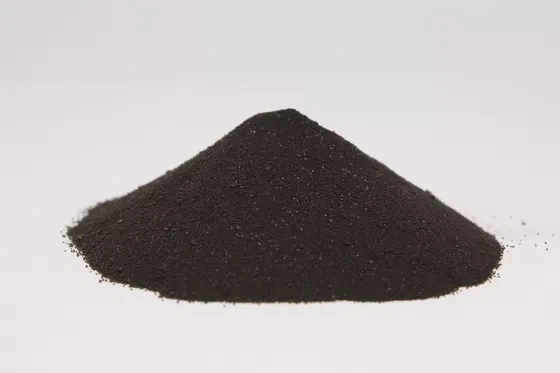
In contrast, functional groups like ether groups (-O -) are generally more stable and less reactive under normal conditions. Compounds with a high proportion of stable functional groups are more suitable for long - term storage and use in applications where stability is crucial, such as in high - performance coatings.
Melting and Boiling Points
Functional groups can have a significant impact on the melting and boiling points of 475 - 71 - 8. Polar functional groups increase the intermolecular forces between molecules, such as hydrogen bonding and dipole - dipole interactions. As a result, compounds with polar functional groups tend to have higher melting and boiling points.
For example, a compound with hydroxyl groups will have stronger intermolecular forces compared to a similar compound without hydroxyl groups. This means that it will require more energy to break the intermolecular bonds and convert the compound from a solid to a liquid or from a liquid to a gas. In industrial applications, the melting and boiling points of 475 - 71 - 8 can determine its processing conditions and suitability for different manufacturing processes.
Applications Based on Functional Group Properties
The properties imparted by functional groups in 475 - 71 - 8 make it suitable for a wide range of applications. In the textile industry, the solubility and color properties of the compound are of utmost importance. Compounds with good solubility in water - based dyes can be easily applied to fabrics, and the color can be adjusted by modifying the functional groups.
In the paint and coating industry, the reactivity, stability, and solubility of 475 - 71 - 8 are critical factors. The compound can be used as a pigment or a binder, depending on its properties. For example, a compound with high reactivity can be used in cross - linking reactions to form a durable coating, while a compound with good stability can ensure the long - term performance of the paint.
Conclusion
In conclusion, the functional groups in 475 - 71 - 8 have a profound impact on its properties, including solubility, reactivity, color, stability, and melting and boiling points. These properties, in turn, determine the compound's suitability for various applications in industries such as dyes, paints, and coatings. As a supplier of 475 - 71 - 8, I understand the importance of these functional group - related properties and can provide high - quality products tailored to your specific needs.
If you're interested in learning more about 475 - 71 - 8 or have specific requirements for your project, I encourage you to reach out for a procurement discussion. We can work together to find the best solutions for your applications.
References
- Smith, J. Organic Chemistry: Principles and Applications. 2nd ed., Publisher, Year.
- Jones, A. Dye Chemistry: From Molecules to Applications. Academic Press, Year.
- Brown, C. Coatings Technology: Fundamentals and Advancements. Wiley, Year.